
Search engine optimization is no longer just a technical process, it has become a strategic approach that blends data, user behavior, and intelligent systems. Over the past few years, artificial intelligence has moved from being a supporting feature to becoming the core of how search engines operate.
In 2026, search algorithms are designed to think more like users. They evaluate not only what content says but also how useful, relevant, and engaging it is. Businesses that still rely on outdated SEO practices often struggle to maintain visibility, while those that understand how AI shapes search results are seeing stronger performance and more consistent traffic.
This shift is not just about adapting to change, it’s about understanding how search engines interpret content, how users interact with information, and how both are now deeply connected through AI.
54%+ of Google searches now show AI-generated results.
The Evolution of SEO: From Keywords to AI
From Keyword-Centric Strategies to Meaningful Content
SEO initially focused on placing exact keywords across pages to signal relevance to search engines. While effective in early years, this practice often produced content lacking clarity, depth, and real value. Today, user intent matters more, requiring meaningful, informative, and engaging content that genuinely answers user queries and builds trust online.
As search engines improved, they began prioritizing:
- Content relevance over keyword repetition
- Contextual meaning instead of exact matches
- Authority and trust over manipulation tactics
This transformation pushed marketers to shift their focus from simply ranking to actually helping users.
The Role of Machine Learning in SEO Evolution
Machine learning introduced the ability for algorithms to analyze patterns and improve over time. Instead of relying on fixed rules, search engines started learning from:
- User clicks and behavior
- Content engagement levels
- Search trends
This allowed them to refine search results continuously, making SEO more dynamic and less predictable.
How AI Is Shaping Search Algorithms in 2026
Advanced Understanding of User Intent
Search engines now go beyond identifying keywords, they interpret the purpose behind a search. AI systems analyze the structure of a query, the language used, and contextual signals to determine what the user is actually looking for.
- A need for information
- A comparison between options
- An intent to make a purchase
AI evaluates these differences and delivers results accordingly, making it essential for content to align with specific user needs rather than broad topics.
Continuous Learning Through User Interaction Data
AI-driven algorithms are constantly learning from how users interact with search results. Metrics such as click-through rates, time spent on a page, and navigation patterns help determine whether content satisfies user intent.
Research indicates that pages with strong engagement signals can outperform others even if they have fewer backlinks. This highlights the importance of creating content that keeps users interested and encourages them to explore further.
Personalization of Search Experiences
- Previous searches
- Location
- Device usage
- Content preferences
This level of personalization means that no two users may see the exact same results. For businesses, this creates the need to develop content that resonates with specific audience segments rather than relying on generic messaging.
Evaluation of Content Depth and Credibility
- Provides comprehensive information
- Covers related subtopics
- Demonstrates expertise
Content that lacks depth or appears superficial is less likely to perform well. This has raised the standard for what qualifies as high-quality content.
Key AI Technologies Influencing SEO
Natural Language Processing (NLP) and Query Understanding
Natural Language Processing enables search engines to interpret human language in a more natural way. Instead of focusing on individual keywords, NLP helps understand full sentences and conversational queries. This is particularly important as users increasingly type or speak queries in a natural format, expecting accurate and relevant answers.
Generative AI and Search Result Presentation
Generative AI is changing how search results are displayed by providing summarized answers directly on the results page. This reduces the need for users to visit multiple websites and places greater emphasis on content that is clear, concise, and informative.
For SEO, this means content must be structured in a way that makes it easy for search engines to extract and display key information.
Predictive Analytics for Content Strategy
Predictive analytics uses data patterns to identify emerging trends and user interests. Businesses that leverage this technology can create content that aligns with future demand rather than reacting to existing trends.
This proactive approach allows for better positioning in search results and improved long-term performance.
Voice and Visual Search Integration
Voice search and visual search technologies are becoming more common, driven by smart devices and advanced image recognition. These technologies require content to be optimized for:
- Conversational queries
- Image-based searches
- Quick, direct answers
Looking to scale faster with AI-driven SEO? Hire top SEO agencies that combine smart technology with expert strategy to drive higher rankings and better ROI.
Changing User Behavior and Its Impact on SEO
Expectation for Instant and Relevant Information
Modern users expect quick and accurate answers. They prefer content that is easy to read, well-structured, and directly addresses their queries.
This has increased the importance of:
- Clear headings
- Logical content flow
- Concise explanations
Growth of Conversational Search Queries
Search queries have become more natural and conversational. Users often phrase their searches as questions or complete sentences, reflecting how they speak in real life.
This trend requires content to be written in a way that matches natural language patterns while still maintaining clarity and depth.
Mobile-First User Behavior
With the majority of searches now happening on mobile devices, user expectations have shifted toward seamless and fast experiences. Mobile optimization is no longer optional, it directly affects rankings and user satisfaction.
Preference for Personalized Content Experiences
Users are more likely to engage with content that feels relevant to their needs. Personalization, driven by AI, ensures that users see content that aligns with their preferences and behavior, increasing engagement and retention.
SEO Strategies for an AI-Driven Era
Aligning Content with User Intent
Understanding user intent is the foundation of modern SEO. Every search query reflects a specific need, whether informational, navigational, or transactional. Creating content that directly answers these needs ensures better engagement and higher rankings. Instead of keyword stuffing, focus on solving problems and providing clear, actionable insights.
Developing High-Quality and Comprehensive Content
Content quality remains a key ranking factor. Well-structured, in-depth content that covers multiple aspects of a topic builds authority and trust. It should be easy to read, informative, and offer unique value that sets it apart from competitors.
Optimizing for Semantic Search
Search engines now prioritize context over exact-match keywords. Semantic SEO involves using related terms, synonyms, and natural language to help search engines understand the broader meaning of your content. This improves visibility across a wider range of search queries.
Enhancing User Experience (UX)
User experience significantly impacts SEO performance. Fast-loading pages, intuitive navigation, and mobile-friendly design improve user satisfaction. Better UX leads to longer session durations, lower bounce rates, and increased conversions.
Implementing Structured Data
Structured data organizes content in a way that search engines can easily interpret. It enhances visibility through rich snippets, improving click-through rates and search presence.
Using AI Tools Strategically
AI tools can streamline SEO processes by analyzing data, identifying trends, and suggesting optimizations. However, human creativity and strategic thinking remain essential for creating meaningful and engaging content.
Not every company has in-house expertise in AI, and that’s completely normal. That’s why many businesses choose to partner with Artificial intelligent agencies to stay competitive in an AI-driven landscape. It’s a smart decision that not only improves efficiency but also ensures better utilization of time and resources.
By working with the right experts, businesses can implement advanced SEO strategies, create high-quality content, and align with evolving search algorithms more effectively.
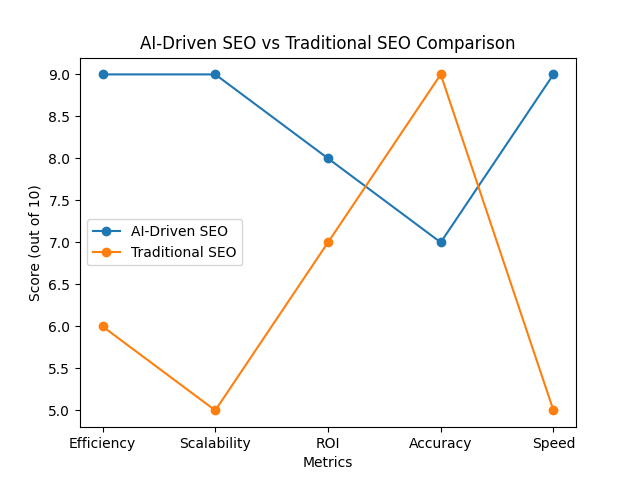
| Factor | AI-Driven SEO | Traditional SEO |
|---|---|---|
| Adoption Rate | 68–78% marketers use AI in SEO (bestaiseotools.ai) | Still used by almost all businesses as core strategy (Concept Beans) |
| Speed & Efficiency | Automates ~44% SEO tasks, saves significant time (Sparkco) | Manual process, slower execution |
| ROI Performance | ~70% businesses report higher ROI (Semrush) | ROI depends on long-term efforts |
| Content Creation | Fast, scalable but sometimes generic | High-quality, creative, human-driven |
| Search Focus | Focus on intent, entities, AI answers (pbjmarketing.com) | Focus on keywords & rankings |
| User Behavior Impact | Supports zero-click searches (60% searches end without clicks) (Semrush) | Relies on click-based traffic |
| Accuracy & Trust | Needs human validation for credibility | More reliable due to human expertise |
| Link Building | Less effective alone (3–5% outreach success) (8Spark) | Strong performance (25–40% success rate) (8Spark) |
| Scalability | Highly scalable with automation | Limited scalability |
| Best Use Case | Data analysis, automation, scaling | Strategy, creativity, authority building |
Challenges and Risks of AI-Driven SEO
Maintaining Originality in a Competitive Landscape
As AI tools make content creation faster and easier, the digital space is becoming more crowded than ever. This creates a major challenge for businesses trying to stand out. Simply producing content is no longer enough; originality is key. Brands must focus on sharing unique insights, real experiences, and fresh perspectives that add genuine value to the audience. Creating distinctive and meaningful content helps build authority and keeps users engaged in a highly competitive environment.
Adapting to Continuous Algorithm Changes
AI-driven search algorithms are constantly evolving, making SEO a moving target. What works today may not work tomorrow. Businesses need to stay informed about updates and trends to maintain their search visibility. Regular monitoring, analysis, and timely adjustments are essential to keep strategies effective and aligned with changing search engine requirements.
Balancing Automation with Human Input
Automation improves efficiency , but relying solely on it can make content feel generic. Human creativity and judgment are crucial to ensure content remains relatable, engaging, and tailored to audience needs.
Ensuring Content Credibility and Trustworthiness
Search engines prioritize accurate and reliable information, so thorough research and fact-checking are essential for building trust and long-term success.
AI-driven SEO in 2026 focuses on understanding user intent, improving content quality, and adapting to intelligent algorithms. Success depends on delivering valuable, user-focused content, leveraging data insights, and continuously refining strategies to stay competitive in an evolving search landscape.